🫀Pulse: A Proof of Life Method for Surveys
Agentic models (e.g., OpenAI's o4) can now pass most attention checks. Pulse verifies real human presence instead.
The Problem
Westwood (2025, PNAS) demonstrates that autonomous synthetic respondents can:
- Pass attention checks with near-perfect accuracy
- Generate coherent responses
- Avoid gotcha questions and 'reverse shibboleth' traps
- Infer researcher hypotheses and generate congenial response patterns
- Systematically perturb polling outcomes
This poses an "existential threat" to online survey research.
Reference: Westwood, S. J. (2025). The potential existential threat of large language models to online survey research. PNAS, 122(47), e2518075122. doi:10.1073/pnas.2518075122
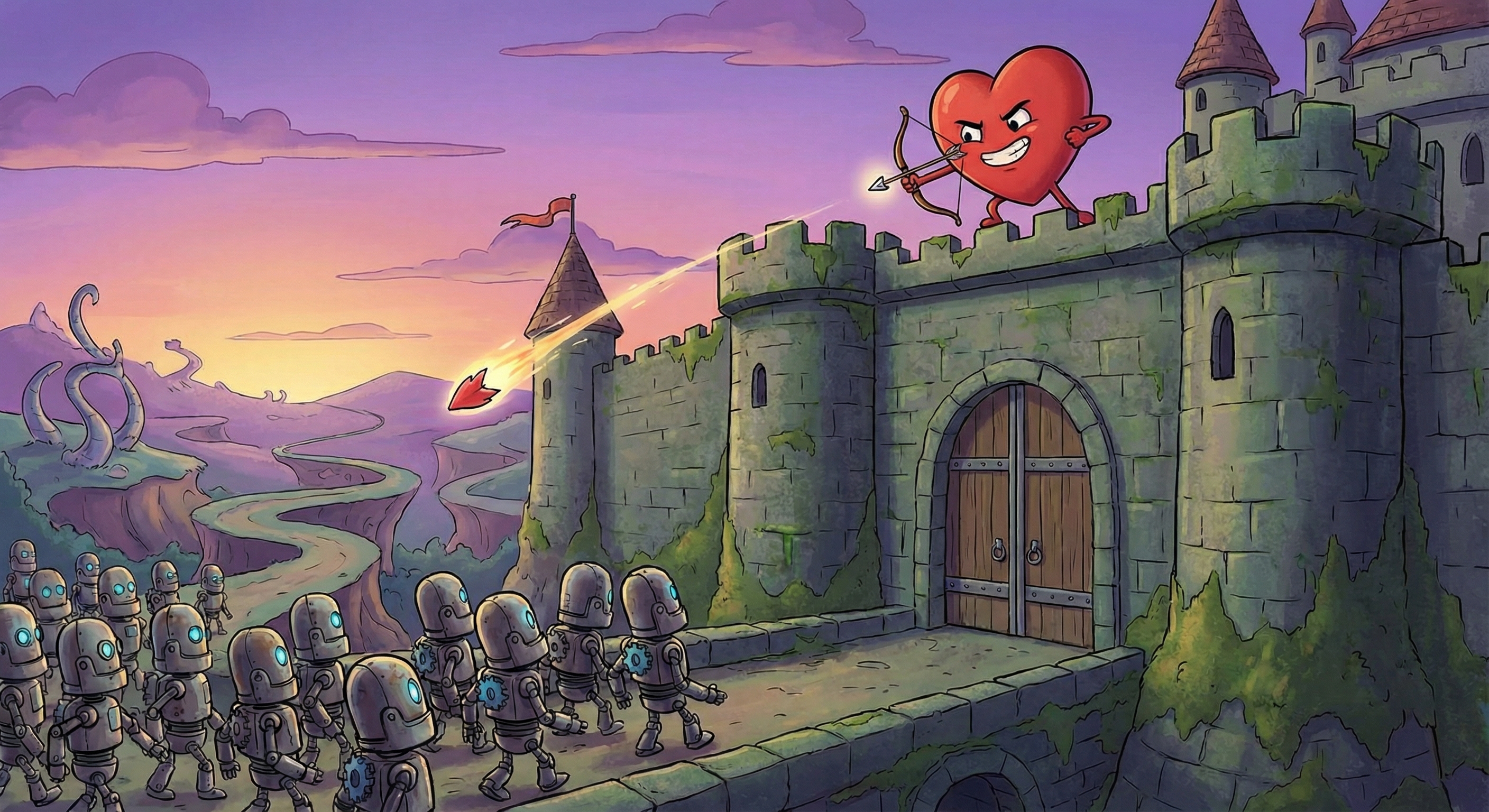
A Short-Term Solution?
A system that adds "proof of life" verification using a physical camera challenge that works on mobile and desktop computers.
- Finger-over-camera check: Confirms a finger is obscuring the camera lens.
- Hardware Interaction: Involves pressing and releasing finger at irregular intervals.
- Privacy: No images are stored, and the system does not require capturing faces or personal surroundings.
Physical interaction with device hardware is a bottleneck generative AI models can't bypass (yet).
Request Pulse 0.3
Request access to Pulse 0.3
Works on mobile and desktop browsers with camera access.
Note: Verification endpoint may change over time. Visit this page for updates.
Special thanks to Sean Westwood for identifying several spoofing attacks. Patches are currently in progress.
Caveats
Pulse is an imperfect solution. Possible limitations include:
- Sample bias: Some respondents will decline camera access, and others may fail the check because of device or browser limitations.
- Increasing barriers: The method excludes individuals without functioning cameras and may disadvantage participants with motor impairments.
- One-time authentication: A single successful check cannot prevent a scenario where a human completes the verification and then transfers control to an agent.
In sum: Pulse is a short-term mitigation method against the tail risk of a widespread botpocalypse. Given the rapid advances in multimodal models, this verification approach may have a limited window of effectiveness.
Privacy and IRB Considerations
Pulse does not capture or store images or biometric information (e.g., fingerprints or face scans). Only success or failure.
Researchers will need to disclose camera usage in consent forms. Example language: "This study uses a brief camera sensor check to verify you are a human participant. No images are recorded or stored." Consult your IRB for specific guidance.
Disclaimer
I do not assume responsibility for any risks associated with using this template. All decisions about deployment, data quality, compliance, and downstream consequences rest entirely with the researcher. This tool is offered on a strictly ‘caveat emptor’ basis and should be used only if you are comfortable bearing all associated risks.
Questions?
Contact: yrv2004@columbia.edu
More tools: tailoredexperiments.com